


6 Key Factors Procurement Teams Must Check Before Buying Industrial Hoses
Selecting the right industrial hose is a critical procurement decision that directly affects safety, operational efficiency, and long-term cost control. In industries such as manufacturing, oil and gas, construction, and chemical processing in Malaysia, the wrong choice can lead to leaks, downtime, and even serious safety incidents.
This guide highlights the six key factors procurement teams should evaluate before purchasing industrial hoses, helping ensure you choose the right product from a reliable hose supplier in Malaysia and avoid costly mistakes.
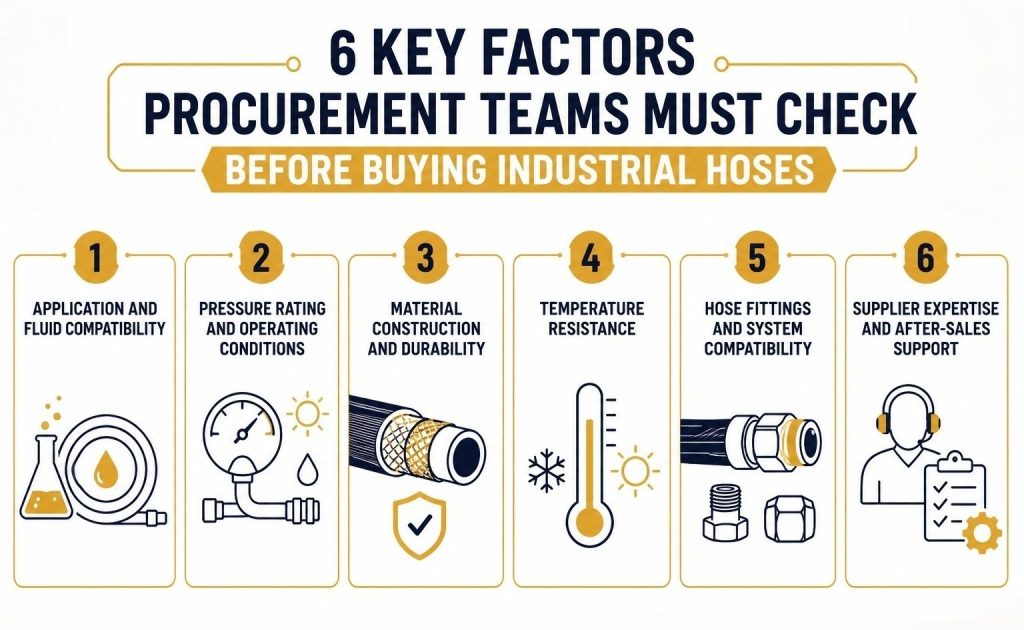
1. Application and Fluid Compatibility
The first and most important step is understanding what the hose will be used for.
Different applications require different hose types:
- Water or air transfer
- Chemical handling
- Fuel and oil transfer
- General industrial use
For example, a PVC hose solution may be suitable for water and light fluids, but it may not be safe for aggressive chemicals. In contrast, a composite hose Malaysia option is designed for more demanding and hazardous applications.
Always match the hose material to the fluid being transported to prevent chemical degradation, leaks, or contamination.
2. Pressure Rating and Operating Conditions
Every industrial hose has a defined pressure limit. Procurement teams must consider:
- Working pressure
- Peak pressure spikes
- Burst pressure rating
Using a hose beyond its rated capacity can result in sudden failure.
Environmental conditions also matter. In Malaysia’s hot and humid climate, hoses must withstand:
- High ambient temperatures
- UV exposure
- Continuous operational stress
Ignoring these factors increases the risk of premature failure.
3. Material Construction and Durability
Industrial hoses are made from different materials, each with specific strengths.
Common options include:
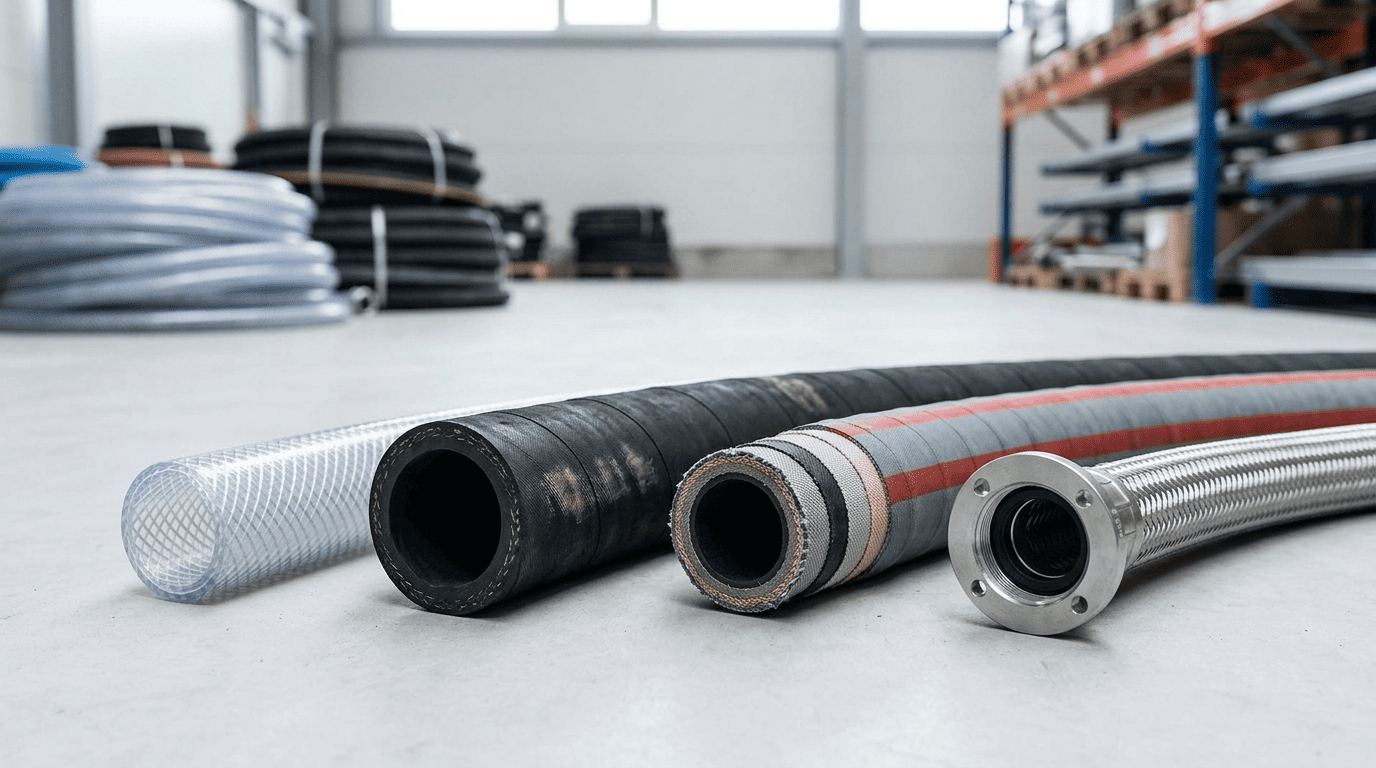
- PVC for flexibility and cost efficiency
- Rubber for abrasion resistance
- Composite layers for chemical and fuel resistance
A well-constructed hose ensures:
- Longer service life
- Better resistance to wear and tear
- Improved safety in demanding environments
For critical applications, composite construction is often preferred due to its layered reinforcement and anti-static properties.
4. Temperature Resistance
Temperature plays a major role in hose performance.
Procurement teams should evaluate:
- Minimum and maximum operating temperature
- Fluid temperature
- Exposure to external heat sources
Excessive heat can cause softening, while low temperatures can make hoses brittle. Selecting the correct hose type ensures stable performance across varying conditions commonly found in Malaysian industrial environments.
5. Hose Fittings and System Compatibility
Even the best hose can fail if paired with incorrect fittings.
Key considerations include:
- Thread type compatibility
- Proper sealing method
- Pressure-rated connections
- Correct sizing and installation
Using suitable hose fitting solutions ensures leak-free performance and system stability. Poor fittings are one of the most common causes of industrial hose failure.
6. Supplier Expertise and After-Sales Support
Choosing the right supplier is just as important as choosing the hose itself.
A reliable hose supplier in Malaysia should provide:
- Technical product guidance
- Application-based recommendations
- Quality assurance and compliance support
- After-sales service and troubleshooting assistance
Working with an experienced supplier reduces procurement risk and ensures you get the correct hose for your specific application.
Industrial Hose Selection Checklist for Procurement Teams
| Key Factor | What to Check | Why It Matters |
|---|---|---|
| Application & Fluid Type | Water, chemical, fuel, air compatibility | Ensures the hose material matches the medium and prevents failure or contamination |
| Pressure Rating | Working pressure, peak pressure, burst pressure | Prevents hose rupture and ensures safe operation under load |
| Material Construction | PVC, rubber, composite layers | Affects durability, chemical resistance, and lifespan |
| Temperature Range | Minimum and maximum operating temperature | Avoids cracking, softening, or performance loss in harsh conditions |
| Hose Fittings Compatibility | Thread type, sealing method, sizing | Prevents leaks, pressure loss, and connection failure |
| Supplier Expertise | Technical support, product range, after-sales service | Ensures correct selection and long-term operational reliability |
Common Mistakes When Buying Industrial Hoses
In industrial procurement, small oversights can lead to major operational issues, safety risks, and unnecessary costs. Many hose failures in Malaysian industries are not caused by the product alone, but by incorrect selection or poor purchasing decisions.
Here are some of the most common mistakes procurement teams should avoid:
- Choosing based on price alone instead of application suitability, which often leads to premature hose failure
- Ignoring chemical compatibility of the hose material, resulting in corrosion, leaks, or contamination
- Overlooking pressure spikes and only checking working pressure, which increases the risk of unexpected bursting
- Using incorrect or low-quality hose fittings, leading to leakage and system inefficiency
- Not considering Malaysia’s heat and humidity conditions, which can accelerate material degradation
- Buying from suppliers without technical support or after-sales service, making troubleshooting and maintenance difficult
Avoiding these mistakes helps ensure better safety, longer service life, and more reliable industrial performance.
Why You Should Choose Continental Hydraulic
Continental Hydraulic is focused on delivering practical industrial hose solutions that match real operating conditions in Malaysia. The emphasis is not just on supplying products, but on ensuring each customer gets the correct hose and fitting for safe and reliable performance.
Application-focused selection
We help you choose the right hose for your specific use, whether it is PVC hose, composite hose, or other industrial hose types.
Technical guidance you can rely on
Our team provides practical advice to reduce the risk of incorrect installation, leaks, and premature failure.
System compatibility support
From hoses to fittings, we ensure all components work together for stable and efficient performance.
Built for industrial conditions
Products are selected to handle pressure, temperature, and demanding environments commonly found in Malaysian industries.
Reduced downtime and risk
Better selection means fewer breakdowns, lower maintenance, and improved operational reliability.
Speak to an Industrial Hose Specialist Today
Ensure the right fit for your application with professional guidance and reliable hose solutions tailored to your industry needs.
Final Thoughts
Procurement teams play a crucial role in ensuring industrial safety and operational efficiency. Evaluating these six key factors helps prevent costly failures and ensures long-term system reliability.
Rather than focusing solely on price, businesses should prioritise compatibility, durability, safety, and supplier expertise when selecting industrial hoses. This approach leads to better performance, reduced downtime, and improved cost efficiency over time.
Frequently Asked Questions (FAQs)
What should procurement teams check first when buying industrial hoses?
The first check should be application and fluid compatibility to ensure the hose material is suitable for the type of liquid, gas, or chemical being transferred.
How important is pressure rating when selecting an industrial hose?
Pressure rating is critical because exceeding the working pressure can cause hose failure, leaks, or even bursting during operation.
Is composite hose always better than PVC hose?
Not always. PVC hoses are suitable for light-duty applications, while composite hoses are better for chemicals, fuels, and high-risk environments.
Why do hose fittings matter in industrial systems?
Incorrect or low-quality fittings can lead to leaks, pressure drops, and system failures even if the hose itself is high quality.
How can I ensure I choose the right hose supplier in Malaysia?
Choose a supplier with technical expertise, a wide product range, proper industry knowledge, and reliable after-sales support.