


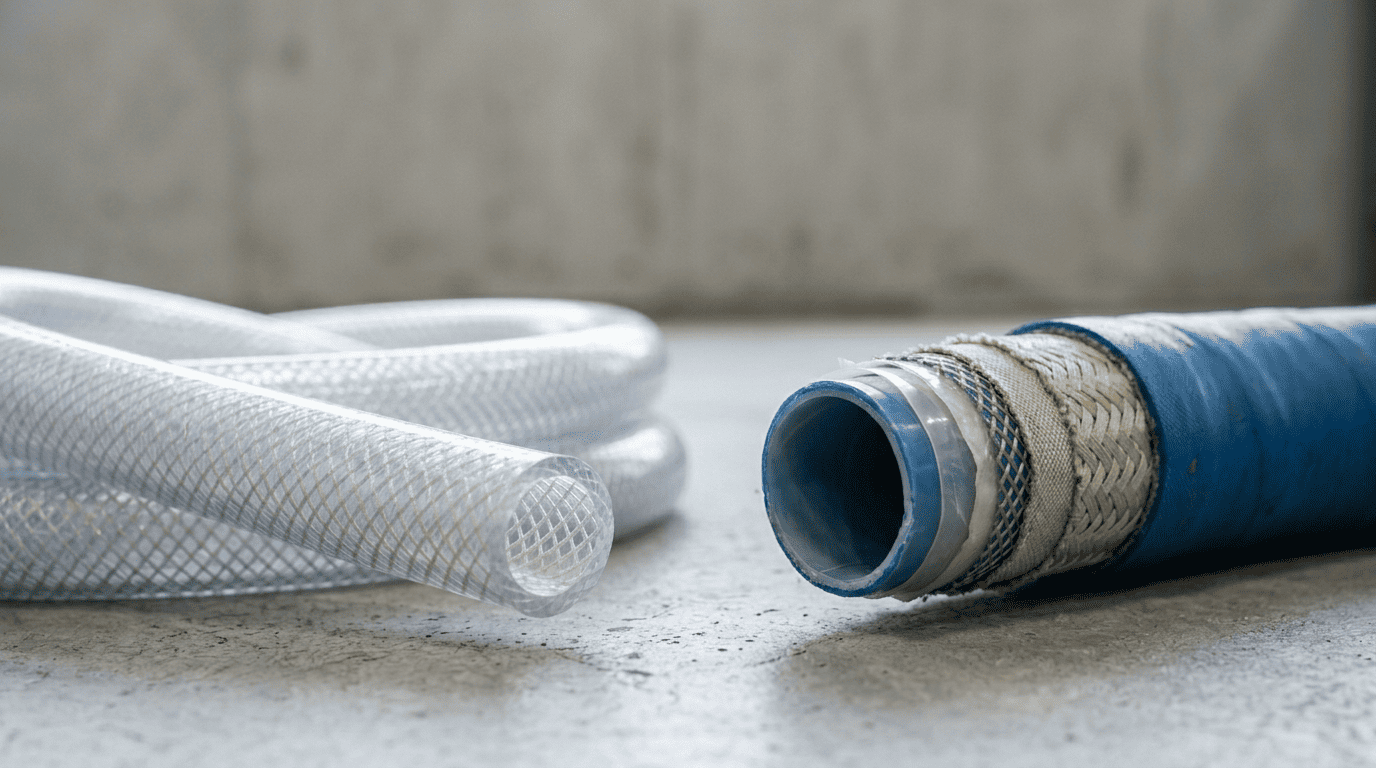
PVC Hose vs Composite Hose: Which Is Safer and More Cost-Effective for Malaysian Industries?
In Malaysia’s demanding industrial environment, choosing the right hose is not just about cost. It directly impacts safety, operational efficiency, and long-term reliability. Whether you operate in manufacturing, oil & gas, palm oil processing, or construction, selecting between PVC hose solutions and composite hose systems can significantly affect performance and risk exposure.
This guide breaks down the key differences, safety considerations, and cost factors to help engineers, procurement teams, and business owners make informed decisions based on real-world applications.
Understanding PVC Hose and Composite Hose
PVC Hose (Polyvinyl Chloride)
PVC hoses are widely used across Malaysian industries due to their lightweight design, flexibility, and affordability. They are commonly applied in:
- Water transfer
- Air and light chemical handling
- Agriculture and irrigation
- General industrial use
They are especially popular among businesses looking for cost-effective hose supplier in Malaysia options for non-critical operations.
Composite Hose
Composite hoses are engineered with multiple layers of thermoplastics and reinforcement materials, making them highly durable and resistant to aggressive substances. They are typically used for:
- Chemical transfer
- Petroleum and oil applications
- Hazardous material handling
- Marine and port operations
These hoses are designed for high-risk environments where safety and chemical resistance are critical.
Key Differences Between PVC Hose and Composite Hose
| Feature | PVC Hose | Composite Hose |
|---|---|---|
| Material | Single-layer thermoplastic | Multi-layer engineered construction |
| Flexibility | High | High |
| Chemical Resistance | Moderate | Excellent |
| Pressure Handling | Low to medium | Medium to high |
| Temperature Resistance | Limited | Wide range |
| Weight | Lightweight | Slightly heavier |
| Cost | Lower upfront | Higher upfront |
| Safety Level | Moderate | High |
Safety Comparison: Which Is Safer?
When it comes to industrial safety, composite hoses clearly offer superior protection.
PVC Hose Safety Considerations
PVC hoses perform well in low-risk environments, but they may:
- Degrade under high temperatures
- Crack under pressure fluctuations
- Be less resistant to aggressive chemicals
This makes them less suitable for industries like oil & gas or chemical processing in Malaysia, where failure can lead to serious hazards.
Composite Hose Safety Advantages
Composite hoses are specifically built for maximum safety and durability:
- Excellent resistance to chemicals, fuels, and solvents
- Anti-static properties to reduce ignition risks
- Strong reinforcement to prevent leaks or bursts
For industries handling hazardous materials, composite hoses are often the safer and more compliant choice.
Cost Comparison: Short-Term vs Long-Term Value
Many businesses focus only on upfront pricing, but the real cost lies in lifecycle performance.
PVC Hose Cost Benefits
- Lower initial investment
- Easy to replace
- Suitable for non-critical applications
However, frequent replacements and potential failures can increase long-term operational costs.
Composite Hose Cost Efficiency
- Higher upfront cost
- Longer lifespan
- Reduced downtime and maintenance
For demanding environments, composite hoses often deliver better return on investment (ROI) due to fewer failures and improved safety.
Which Hose Is Better for Malaysian Industries?
The right choice depends on your application, risk level, and operating conditions.
Choose PVC Hose if:
- You need a budget-friendly solution
- Applications involve water, air, or mild chemicals
- Operating conditions are low pressure and low temperature
Choose Composite Hose if:
- You handle chemicals, fuels, or hazardous liquids
- Safety and compliance are top priorities
- You require durability in extreme conditions
- Downtime or leaks would be costly
Why Choosing the Right Hose Supplier in Malaysia Matters
Beyond selecting the hose type, working with a reliable hose supplier in Malaysia is critical. A trusted supplier ensures:
- Proper product selection based on your application
- Compliance with safety and industry standards
- Availability of compatible hose fitting Malaysia solutions
- Ongoing technical support and maintenance advice
An experienced supplier can help you avoid costly mistakes and safety risks.
Your Trusted Partner for Industrial Hose Solutions
Choosing the right supplier makes all the difference in performance and safety. Continental Hydraulic Trading Sdn Bhd delivers reliable, application-driven solutions for Malaysian industries.
- Proven experience: Established expertise in hydraulic systems, hoses, and fittings
- Complete solutions: From PVC and composite hoses to full hydraulic systems
- Technical support: Engineering advice, system design, and troubleshooting
- Quality products: Built for high pressure, chemicals, and harsh environments
- Custom solutions: Tailored recommendations based on your application
- After-sales support: Ongoing service to reduce downtime and maintain performance
Work with a supplier that understands your operations, not just your products.
Get Expert Hose Solutions Today
Find the right PVC or composite hose for your application with guidance from industry specialists.
Final Thoughts
Choosing between PVC and composite hoses is not just a technical decision. It is a business-critical investment. While PVC hoses offer affordability and flexibility for general use, composite hoses provide enhanced safety, durability, and long-term value for demanding industrial environments in Malaysia.
Ultimately, the best approach is to evaluate your operational risks, chemical exposure, and lifecycle costs rather than focusing solely on upfront pricing.
Frequently Asked Questions (FAQs)
What is the main difference between PVC hose and composite hose?
PVC hoses are lightweight and cost-effective for general use, while composite hoses are multi-layered and designed for handling chemicals, fuels, and high-risk applications with better safety.
Which hose is safer for industrial use in Malaysia?
Composite hoses are generally safer, especially for hazardous materials, due to their strong construction, chemical resistance, and anti-static properties.
Is PVC hose suitable for chemical transfer?
PVC hoses can handle mild chemicals, but for aggressive or hazardous substances, composite hoses are the better and safer choice.
Why are composite hoses more expensive than PVC hoses?
Composite hoses use advanced multi-layer materials and are built for durability and safety, which increases upfront cost but reduces long-term risks and maintenance.
How do I choose the right hose for my application?
You should consider fluid type, pressure, temperature, environment, and safety requirements, and consult a reliable supplier to ensure proper selection.