


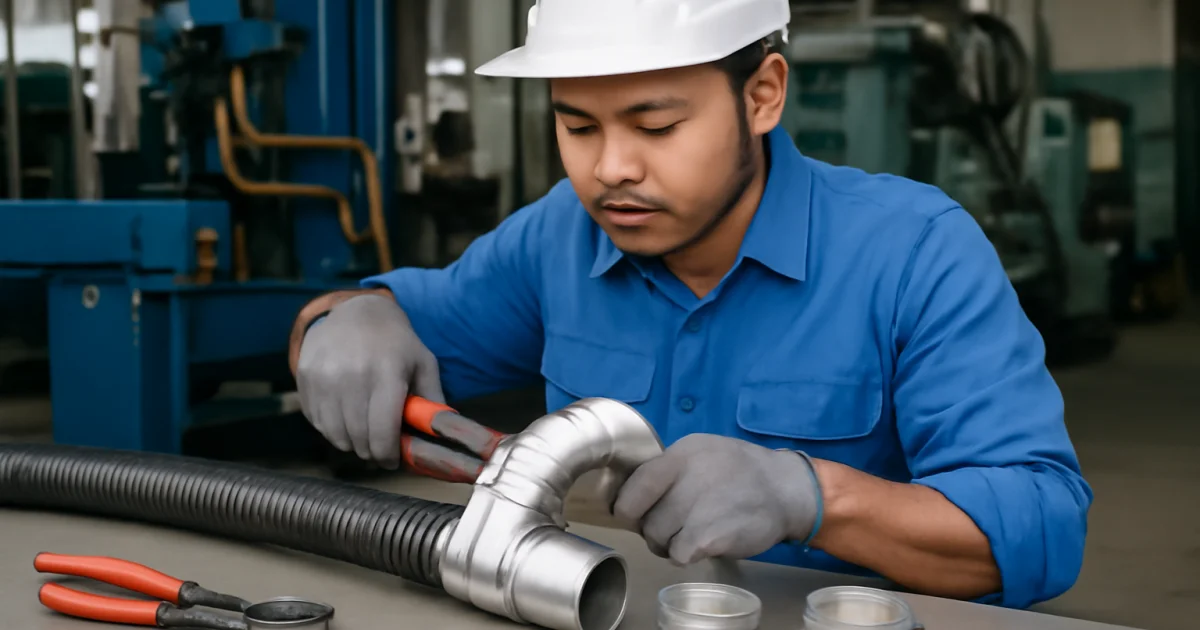
Step-by-Step Tutorial: Installing Composite Hoses for Industrial Applications in Malaysia
Composite hoses are essential in many Malaysian industries, from oil and gas to manufacturing and chemical processing. Their flexible, multi-layered construction makes them ideal for safely transferring a wide range of fluids, including chemicals, fuels, and oils. However, correct installation is critical to ensure safe operation, prevent costly leaks, and maximise the service life of your hoses. This tutorial provides a detailed, step-by-step guide for maintenance engineers, factory technicians, and plant managers responsible for composite hose installation in Malaysian industrial environments.
Understanding Composite Hoses: Construction and Applications
Composite hoses are engineered using multiple layers of thermoplastic films and fabrics, reinforced with a wire helix. This design offers excellent flexibility, chemical resistance, and strength, making them suitable for transferring hazardous and non-hazardous liquids in demanding environments. Industries such as petrochemical, chemical manufacturing, mining, and industrial processing in Malaysia rely on composite hoses for their ability to handle aggressive fluids safely.
Unlike single-material hoses, composite hoses offer:
- High flexibility for easy routing around equipment and tight spaces
- Compatibility with a wide range of chemicals and fuels
- Lightweight design compared to hoses with similar pressure ratings
- Enhanced safety due to leak resistance and robust construction
For more on the strengths of composite hoses, you may also be interested in our article PVC Hose Vs Composite Hose: Which Is Safer And More Cost Effective For Malaysian Industries.
Key Factors When Selecting Composite Hoses in Malaysia
Choosing the appropriate composite hose for your specific industrial application is a crucial first step. Consider the following:
- Chemical compatibility: Ensure the hose material is resistant to the chemicals or fluids being transferred.
- Pressure and temperature rating: Select hoses that can withstand your system’s maximum pressure and temperature to avoid premature failure.
- Certification and standards: Confirm that the hose meets relevant Malaysian and international standards (such as ISO, EN, or MS) for safety and performance.
- Fitting compatibility: Make sure the hose end fittings are suitable for your system’s connectors and the intended application.
- Supplier support: Work with established suppliers, such as Continental Hydraulic Trading Sdn Bhd, who can provide technical advice, after-sales support, and documentation.
Thorough documentation and consultation with your supplier can prevent operational issues down the line and ensure compliance with industry regulations.
Pre-Installation Preparation: What You Need
Before starting installation, gather the necessary tools, components, and safety equipment:
- Composite hose (correct type, length, and pressure rating for your application)
- Hose fittings (ensure compatibility; see Pneumatic Tubing Hose Fitting for options)
- Gaskets and seals suitable for the fluid being transferred
- Pipe wrenches, spanners, or adjustable wrenches
- Torque wrench for accurate tightening
- Lubricant (as specified by the manufacturer)
- Personal protective equipment (gloves, eye protection, chemical-resistant clothing)
- Clean workspace free from debris and obstructions
Always verify that the composite hose and fittings are suitable for both the fluid being conveyed and the system’s pressure and temperature requirements. For applications involving aggressive chemicals or extreme conditions, consider stainless steel flexible hose or stainless steel hydraulic tubing as alternatives.
Step 1: Inspect Hose and Fittings
Begin by thoroughly inspecting the composite hose and all associated fittings. Look for signs of damage such as cuts, abrasions, kinked wires, or crushed ends. Check the hose labels or markings to confirm compatibility with the intended fluid and pressure rating. Inspect hose fittings for defects, corrosion, or deformation. Do not use any component showing signs of compromise. Using certified, quality-assured parts from reputable suppliers such as Continental Hydraulic Trading Sdn Bhd ensures long-term safety and performance.
Verify the manufacturer’s documentation for installation guidance and recommended torque specifications for hose fittings.
Step 2: Measure and Cut Hose to Length
Carefully measure the required hose length, allowing for system movement, expansion, and routing around equipment. Avoid making hoses unnecessarily short or excessively long, as both can compromise performance and safety. Use a suitable hose cutting machine or a fine-toothed saw to produce a clean, square cut, ensuring no frayed edges or loose wire ends remain.
Tip: Mark the cut location with tape before cutting to prevent the hose layers from separating. Always cut perpendicular to the hose axis for best results.
Step 3: Prepare Hose Ends
After cutting, prepare the hose ends for fitting installation:
- Remove any debris, dust, or loose material from inside and outside the hose using clean compressed air or a dry cloth.
- Check that the wire helix is not protruding or damaged.
- Apply a small amount of suitable lubricant to the hose end if specified by the fitting manufacturer (avoid petroleum-based products unless approved).
Proper preparation helps ensure a leak-free, secure connection.
Step 4: Attach Hose Fittings
Align the fitting with the hose end, ensuring correct orientation for the intended installation. Insert the fitting according to the manufacturer’s instructions—some fittings require screwing, pressing, or crimping.
- Push or screw the fitting into the hose end, making sure it is fully seated and properly aligned.
- If using crimped fittings, position the crimp sleeve and use a calibrated crimping machine to apply even pressure. Confirm the crimp diameter matches the manufacturer’s specifications.
- Install gaskets or seals as required for the fluid type and pressure rating.
- Tighten threaded fittings with a torque wrench to the recommended value, avoiding over-tightening, which can damage threads or seals.
For high-pressure or critical applications, consider fittings rated for demanding environments—see options for hose fitting Malaysia and Composite Hose Malaysia suppliers.
Step 5: Install the Hose Assembly into the System
Route the assembled hose to its designated location, taking care to avoid sharp bends, kinks, or contact with moving machinery parts. Secure the hose with appropriate clamps or supports, ensuring no excessive stress is placed on the fittings or hose body.
- Allow sufficient slack for thermal expansion and vibration.
- Position the hose to avoid abrasion against surfaces or equipment.
- Do not twist or stretch the hose during installation.
- If connecting to stainless steel ball valves or manifolds, ensure all mating surfaces are clean and properly aligned. For more, see stainless steel flexible hose options.
Use the correct tools to avoid damaging fittings—a primary cause of leaks or premature hose failure.
Step 6: Pressure and Leak Testing
Once installed, every composite hose assembly should undergo pressure and leak testing before being placed into service:
- Gradually pressurise the system to the recommended test pressure following manufacturer guidelines.
- Inspect all connections for leaks, abnormal bulges, or movement.
- Use soap solution or electronic leak detectors to identify small leaks.
- If a leak is detected, depressurise the system safely before tightening or reassembling the joint.
- Document the test results for maintenance records.
Professional testing and certification services, such as those offered by Continental Hydraulic Trading Sdn Bhd, can ensure compliance with safety standards and reduce operational risk.
Step 7: Commissioning and Ongoing Maintenance
After a successful test, the hose assembly can be commissioned into daily operation. Establish a regular inspection and maintenance routine to ensure long-term reliability:
- Visually inspect hoses for wear, abrasion, or damage at regular intervals
- Check fittings and clamps for loosening or corrosion
- Replace hoses or components at the first sign of significant deterioration
- Keep records of installation, testing, and maintenance activities
For demanding applications, schedule periodic professional servicing or hydrostatic testing to ensure continued compliance and safety.
Practical Example: Composite Hose Installation in a Malaysian Chemical Plant
Consider a chemical manufacturing plant in Selangor replacing aging transfer lines with new composite hoses. The maintenance team follows these steps:
- They select chemical-resistant composite hoses rated for the specific acids and solvents in use.
- Using calibrated hose cutting equipment, they cut each hose to precise lengths for pump-to-tank connections.
- Hose fittings with PTFE gaskets are installed and crimped using manufacturer-approved tools.
- The assemblies are routed above ground, avoiding pinch points and installing robust supports at 1.5m intervals.
- The entire system is pressure-tested to 1.5 times the operating pressure. One minor leak is detected and resolved by re-torquing the fitting.
- After a final inspection, the new hose lines are commissioned, and maintenance logs are updated.
This careful approach minimises downtime and prevents hazardous leaks, demonstrating best practices for industrial applications.
Checklist: Best Practices for Composite Hose Installation
- Confirm hose compatibility with intended fluid, temperature, and pressure.
- Use only certified and undamaged hoses and fittings.
- Measure twice, cut once—ensure correct hose length for each connection.
- Prepare hose ends carefully to avoid leaks and ensure secure fitting installation.
- Follow manufacturer instructions for attaching and tightening fittings.
- Support hoses properly along their length and avoid sharp bends or kinks.
- Perform documented pressure and leak testing after installation.
- Implement a routine inspection and maintenance schedule.
- Train staff in proper handling and emergency procedures for hose failures.
Adhering to these best practices helps prevent common mistakes and ensures a safe, reliable operation.
Scenario Analysis: Troubleshooting Common Installation Issues
Despite careful preparation, issues may arise during or after composite hose installation. Here are some typical scenarios and recommended responses:
- Leak Detected at Fitting: Stop operation immediately, depressurise the system, and inspect the joint. Check for proper seating of gaskets and correct torque. If necessary, disassemble, clean, and reassemble with new seals.
- Hose Kinking or Sagging: Evaluate the installed hose length and routing. Shorten excessively long hoses and add supports where required. Avoid tight bends that exceed the hose’s minimum bend radius.
- Premature Wear or Abrasion: Identify and eliminate points of hose contact with abrasive surfaces or vibrating equipment. Use protective sleeves or relocate hoses as needed.
- Repeated Fitting Loosening: Review torque procedures and ensure the right tools are used. Consider vibration dampers or secure clamps if mechanical vibration is present.
Regular monitoring and prompt corrective action are essential to maintain hose integrity and prevent downtime.
Common Mistakes to Avoid During Installation
- Using incompatible fittings: Always match hose and fitting materials for chemical and pressure compatibility.
- Improper hose length: Short hoses can stress fittings; excessive lengths sag or kink. Measure accurately.
- Over-tightening fittings: Excessive torque can damage threads or deform seals, causing leaks.
- Skipping pressure testing: Never operate a new assembly without leak testing.
- Neglecting safety gear: Always wear appropriate PPE, especially when handling hazardous fluids.
- Ignoring manufacturer instructions: Refer to documentation for correct procedures and torque values.
Conclusion: Ensuring Reliable Composite Hose Installations in Malaysia
Proper installation of composite hoses is vital for industrial safety, efficiency, and equipment longevity. By following a disciplined, step-by-step process—from selection and preparation to fitting, testing, and maintenance—Malaysian industrial facilities can significantly reduce the risk of leaks, system downtime, and costly repairs. Partnering with experienced hose suppliers and service providers such as Continental Hydraulic Trading Sdn Bhd offers added assurance, access to quality products, and professional support.
For more information on composite hoses and related products, visit our Composite Hose catalogue or explore our article on key factors to consider before buying industrial hoses. With the right approach, your facility will achieve safe, reliable, and cost-effective fluid transfer solutions, meeting the demands of Malaysia’s dynamic industrial landscape.
Frequently Asked Questions
What are the advantages of using composite hoses over traditional rubber hoses in industrial applications?
Composite hoses offer greater flexibility, lighter weight, and enhanced chemical resistance compared to traditional rubber hoses. Their multi-layer construction makes them suitable for handling a wide variety of chemicals, fuels, and oils, and their leak-tight design enhances safety for demanding Malaysian industries.
How do I choose the right hose fitting for my composite hose in Malaysia?
Always match the fitting material to the hose and the fluid being transferred. Consider pressure and temperature ratings, chemical compatibility, and the type of connection (e.g., threaded, flanged, or camlock). Quality hose fitting Malaysia suppliers, such as Continental Hydraulic Trading Sdn Bhd, can provide expert advice and a wide selection of certified fittings.
Why is pressure and leak testing important after installing composite hoses?
Pressure and leak testing confirms that the hose assembly is correctly installed and free from leaks or weak points before being put into service. This step is crucial for safety, preventing hazardous spills, equipment damage, or costly downtime in industrial environments.
Can composite hoses be used with stainless steel ball valves in Malaysia?
Yes, composite hoses are commonly used with stainless steel ball valves and other flow-control components. Ensure that the fittings and hose ends are compatible and that all seals are suitable for the specific fluid and pressure involved. Proper installation and alignment are essential for a leak-free connection.
How often should composite hoses be inspected or replaced in industrial settings?
Composite hoses should be visually inspected at regular intervals, typically monthly or quarterly depending on use and environment. Look for signs of wear, abrasion, leaks, or fitting loosening. Replace hoses immediately if significant deterioration or damage is detected, and always follow the manufacturer’s recommended service life.
Get Expert Support for Composite Hose Installation in Malaysia
Ensure your industrial facility benefits from professional composite hose installation and maintenance. Continental Hydraulic Trading Sdn Bhd provides a complete range of composite hoses, fittings, testing, and technical support tailored to Malaysian industries. Reduce downtime and boost safety with our one-stop hydraulic and pneumatic solutions.