


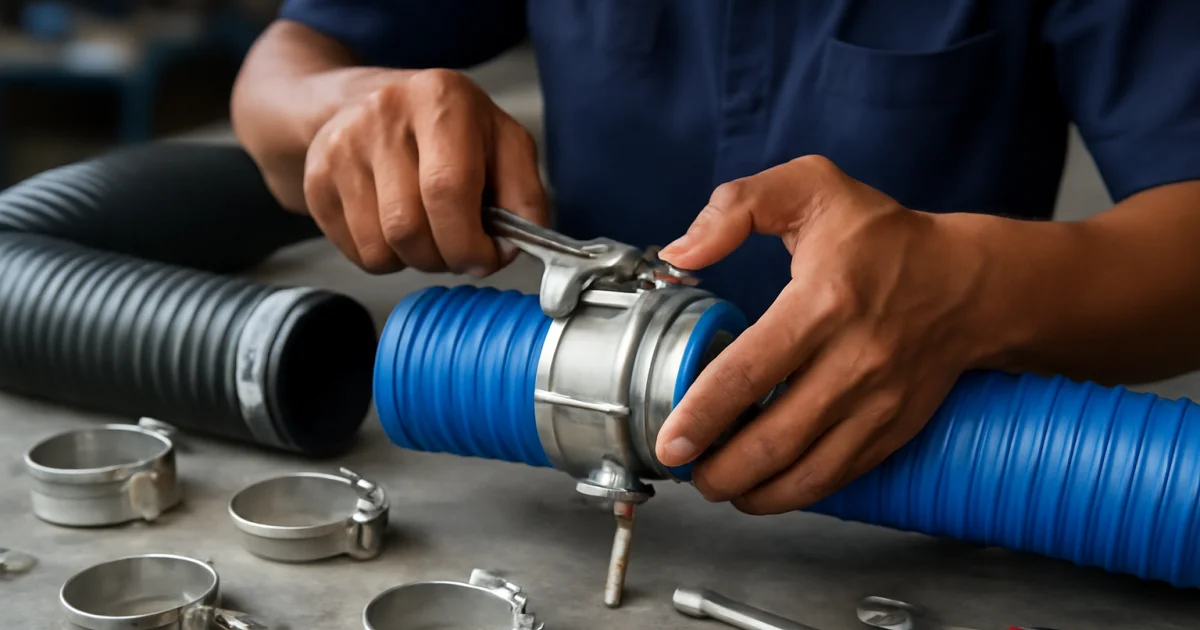
Hands-On Tutorial: Proper Installation and Use of Clamps & Couplings for Industrial Hoses in Malaysia
Industrial hoses are critical components in Malaysia’s manufacturing, oil & gas, mining, and process sectors. The safety, reliability, and service life of hose assemblies depend not only on the quality of the hoses selected, but also on the proper installation and use of clamps & couplings. This hands-on tutorial is designed for maintenance teams, technical staff, and engineers seeking efficient, safe, and leak-free hose connections. For readers comparing options, Clamps & Couplings Malaysia is the main topic this guide explains.
Why Correct Installation of Clamps & Couplings Matters
Poorly installed clamps and couplings can result in leaks, hose blow-offs, equipment damage, and workplace accidents. In industries where hydraulic hose, air tubing, or fluid transfer is mission-critical, small mistakes can cause costly downtime. Following best practices ensures that connections handle pressure, vibration, and environmental demands. It also helps you comply with safety regulations and prolongs the lifespan of your hose assemblies.
Beyond immediate safety, correct installation can significantly reduce maintenance costs and enhance operational uptime. Properly fitted clamps and couplings prevent gradual leaks that may otherwise lead to undetected product loss or contamination, especially in sectors such as food processing and pharmaceuticals. Regulatory compliance is also more easily achieved when connections are made according to standards, minimizing the risk of audit failures or penalties.
Types of Clamps & Couplings Used in Malaysia
Before starting installation, it’s vital to understand the types of clamps and couplings suitable for industrial hoses:
- Worm Gear Clamps: Common for general-purpose hose connections where moderate pressure is expected.
- T-Bolt Clamps: Ideal for high-pressure or vibration-prone applications like hydraulic or pneumatic tubing.
- Ear Clamps: Used in pneumatic and small-diameter hoses, offering a tamper-resistant seal.
- Quick-Release Couplings: Allow for fast connection and disconnection, often used in compressed air and fluid transfer lines.
- Camlock Couplings: Widely used in industrial hose Malaysia applications for easy and secure hose-to-hose or hose-to-equipment connections.
- Push-to-Connect Fittings: For pneumatic tubing and air fittings in automated systems.
- Hydraulic Hose Couplings: Specially designed for high-pressure hydraulic applications, ensuring leak-proof performance.
Choosing the right clamp or coupling depends on hose type, size, fluid, pressure rating, and environmental conditions. Always refer to manufacturer recommendations and consult with a qualified hose pipe supplier for guidance.
For example, in the chemical industry, stainless steel or PTFE-lined couplings are often preferred for their compatibility with corrosive fluids. In food and beverage plants, sanitary quick-release couplings help maintain hygiene standards. Meanwhile, mining and construction sites frequently use T-bolt or heavy-duty band clamps to withstand high vibration and mechanical stress. Understanding these industry-specific needs helps ensure optimal clamp and coupling selection.
Required Tools and Materials
- Appropriate clamps & couplings (matched to hose size and application)
- Industrial hoses (hydraulic, pneumatic, or process hoses)
- Calipers or a tape measure (for accurate hose sizing)
- Screwdrivers, torque wrenches, or ratchets (as required by clamp type)
- Lubricants (compatible with hose and fluid)
- Clean cloths for wiping hose ends and fittings
- Safety equipment: gloves, eye protection, and safety boots
- Safety pins or locking devices if required for coupling type
Advanced installations may also require crimping tools or hydraulic presses for attaching certain types of couplings. For large-diameter hoses, mechanical lifting aids or supports can reduce the risk of injury during handling. Always ensure that the working area is clean and free from debris to avoid contamination or assembly errors.
Step-by-Step Guide: Installing Clamps & Couplings on Industrial Hoses
- Identify Hose and Fitting Compatibility
Check that the hose, clamp, and coupling are compatible in terms of size, pressure rating, and fluid type. For stainless steel ball valve Malaysia applications or corrosive environments, select stainless steel components. - Inspect Hose Ends and Fittings
Ensure hose ends are clean, undamaged, and cut squarely. Inspect couplings for damage, debris, or worn seals. Discard and replace any defective parts. - Pre-Fit the Clamp or Coupling
Slide the clamp loosely onto the hose before inserting the fitting or coupling. For push-to-connect or camlock types, ensure the hose end is fully seated into the coupling. - Lubricate if Needed
If hose or coupling installation is difficult, use a compatible lubricant (never use petroleum-based lubricants on hoses not rated for them). This reduces friction and prevents damage to the hose lining. - Securely Attach the Coupling
Push, twist, or thread the coupling into/onto the hose as recommended by the manufacturer. For barbed fittings, ensure the hose is fully pushed over all barbs. For threaded connections, use thread sealant if specified. - Position the Clamp Correctly
Move the clamp to the correct position — typically just behind the raised barb or bead of the fitting. The clamp should not be on the very end of the hose or over the coupling’s edge. - Tighten the Clamp to Specification
Using the recommended tool, tighten the clamp evenly. For worm gear clamps, a screwdriver or nut driver is common; T-bolt clamps require a torque wrench. Do not overtighten, as this can damage the hose or cause leaks. - Install Safety Pins or Locks
For high-pressure and critical applications, install hose safety pins or locking devices to prevent accidental disconnection. - Visually Inspect the Assembly
Check that the clamp is aligned, the hose is not pinched, and the coupling is fully seated. Look for gaps, crooked fittings, or signs of damage. - Pressure Test the Hose Assembly
When possible, test the hose assembly at working or proof pressure before putting it into service. This step is critical for hydraulic hose near me requests or mission-critical lines. Some suppliers offer hydro testing services for added assurance.
Tip: Document each installation with photos or checklists, especially for critical or regulated applications. This supports traceability and future maintenance activities.
Expanded Best Practices for Safe and Reliable Hose Connections
- Always use the correct size clamp and coupling for the hose diameter and wall thickness.
- Do not reuse old or deformed clamps/couplings; fatigue or corrosion can cause sudden failure.
- For stainless steel flexible hose applications, use stainless steel clamps and fittings to prevent galvanic corrosion.
- Mark the insertion depth on hoses to ensure full engagement into couplings.
- Use double clamps for critical or high-pressure applications, spacing them slightly apart for redundancy.
- Document installation details for maintenance records and compliance.
- Train personnel on safe installation techniques and periodic inspection routines.
- Perform a risk assessment before installation, especially in hazardous environments. Identify potential points of failure and implement controls accordingly.
- Store hoses, clamps, and couplings in dry, clean areas to prevent pre-installation corrosion or contamination.
- Before starting work, verify that all tools are calibrated and in good condition to avoid improper tightening or assembly.
Regularly review industry standards and manufacturer bulletins for updates to installation procedures or safety recommendations. In Malaysia, many industries align with ISO, ASTM, or local SIRIM standards for hose assemblies; adherence to these guidelines can improve both safety and operational reliability.
Common Installation Mistakes to Avoid
- Using mismatched hose and coupling sizes, which can result in leaks or blow-offs.
- Overtightening clamps, leading to hose damage or crushed linings.
- Placing clamps in the wrong position, such as too close to the hose end or over the coupling edge.
- Failing to install safety pins or locking devices in high-risk applications.
- Neglecting regular inspection and retightening schedules, especially after initial run-in.
- Skipping pressure testing, increasing the risk of failures under operational loads.
- Using inappropriate lubricants that degrade hose materials.
- Assuming visual inspection alone is sufficient—hidden defects or internal degradation can only be found through pressure tests or non-destructive testing.
- Not training personnel on the latest procedures or updates, leading to inconsistent installation quality across teams.
By actively avoiding these pitfalls, companies reduce the risk of unexpected failures and extend the lifespan of their hose assemblies.
Maintenance, Inspection, and Replacement Tips
After installation, ongoing maintenance is essential to ensure continued safety and reliability:
- Inspect hose assemblies regularly for leaks, slippage, corrosion, and wear.
- Check clamp tightness periodically, especially after thermal cycles or vibration events.
- Replace hoses and fittings at recommended intervals or at the first sign of damage.
- For critical applications, consider scheduled hydrostatic testing of hoses and connections.
- Keep detailed maintenance logs for safety audits and troubleshooting.
- Use color-coded tags or labels to track installation dates and inspection schedules, simplifying monitoring for maintenance teams.
- Train staff to identify early signs of failure, such as bulging, cracking, or discoloration at the hose ends or fittings.
- For hoses in outdoor or harsh environments, consider UV-resistant covers and corrosion-resistant clamps to extend service life.
For advanced maintenance and repair, many Malaysian suppliers offer onsite hydraulic hose testing, crimping, and custom hydraulic power pack manufacturing. These services are particularly valuable for plants operating around the clock or those with complex fluid transfer systems requiring minimal downtime.
In-Depth Practical Example: Installing a Camlock Coupling on a Chemical Transfer Hose
- Measure hose diameter and select a compatible camlock coupling and stainless steel clamp.
- Clean the hose end and inspect both hose and coupling for defects.
- Slide the clamp over the hose, then insert the camlock coupling fully into the hose end.
- Position the clamp just behind the camlock’s bead and tighten with a torque wrench to the specified value.
- Engage cam arms and install safety locks if required for the application.
- Inspect assembly and pressure test before use with chemicals.
This method ensures a secure, leak-free connection even under aggressive operating conditions, and is similar to procedures used in many process industries across Malaysia.
Extended example scenario: Imagine a chemical plant operating multiple transfer lines for different corrosive fluids. Each line requires rapid hose changes between batches. By using color-coded camlock couplings and corresponding clamps, the maintenance team can quickly and confidently assemble and disassemble hoses without risk of cross-contamination. After each installation, a hydrostatic pressure test and visual inspection confirm the connection’s integrity, while all steps are logged for compliance audits.
Comparing Hose Assembly Methods: Clamps vs. Crimped Couplings
In some applications, maintenance teams may need to decide between using traditional clamps and more permanent crimped couplings:
- Clamps: Offer flexibility for field repairs, allow for quick changes, and are suitable for moderate pressure applications. However, they require regular inspection and retightening, especially in high-vibration environments.
- Crimped Couplings: Provide a tamper-resistant, high-strength connection ideal for hydraulic and high-pressure systems. Installation requires specialized crimping equipment, but the result is a more consistent and permanent joint with lower risk of loosening over time.
For most process and utility hoses, clamps are preferred for their ease of use and versatility. For hydraulic lines, especially those carrying high-pressure fluids, crimped couplings offer superior safety and longevity. Consulting with your hose supplier can help determine the best method for your specific needs.
Checklist: Preparing for Hose Clamp & Coupling Installation
- Review site safety protocols and obtain necessary permits.
- Gather all required hoses, clamps, couplings, and tools.
- Verify compatibility of all components with process fluids and pressures.
- Ensure work area cleanliness and access to safety gear.
- Assign tasks and review step-by-step procedures with all personnel involved.
- Have spare clamps, couplings, and seals available in case of defects or damage during assembly.
- Document component batch numbers for traceability and future maintenance.
Following a checklist not only improves installation quality but also supports future troubleshooting and compliance requirements.
Resources and Where to Get Support
If you need guidance in selecting the correct clamps, couplings, or industrial hoses, or require professional installation and testing, partner with a trusted hose pipe supplier experienced in hydraulic, pneumatic, and process fluid systems. Services such as hydrostatic testing, hose crimping, and replacement of stainless steel ball valve Malaysia components are often available for plant engineers and MRO teams.
For more detailed technical articles, see 6 Key Factors Procurement Teams Must Check Before Buying Industrial Hoses and The Hidden Risks Of Using Low Quality Industrial Hoses.
Conclusion
Proper installation and use of clamps & couplings play a vital role in the performance and safety of industrial hose Malaysia systems. By following best practices and using quality components, maintenance teams and engineers can minimize downtime, reduce the risk of accidents, and maximize operational reliability. Always use trusted products from established suppliers and consult technical experts for challenging applications.
Frequently Asked Questions
What are the most common types of clamps & couplings for industrial hoses in Malaysia?
The most commonly used clamps include worm gear clamps, T-bolt clamps, and ear clamps. For couplings, camlock couplings, quick-release couplings, push-to-connect fittings, and hydraulic hose couplings are prevalent. The choice depends on pressure, fluid type, and industry application.
How can I ensure a leak-free connection when installing hose clamps and couplings?
Ensure compatibility between the hose, clamp, and coupling. Clean and inspect all parts before assembly, position the clamp correctly behind the barb or bead, tighten to the specified torque, and always pressure test the assembly before putting it into service.
Why is it important to use safety pins or locking devices in hose assemblies?
Safety pins or locking devices prevent accidental hose disconnection, especially in high-pressure or critical fluid transfer applications. They enhance safety and reduce the risk of leaks, blow-offs, or equipment failure.
When should I replace industrial hose clamps and couplings?
Replace clamps and couplings if they show signs of corrosion, fatigue, deformation, or damage. It is also good practice to replace them during scheduled maintenance or whenever you replace the hose itself.
Are stainless steel ball valves suitable for all industrial hose installations?
Stainless steel ball valves are ideal for corrosive, high-pressure, or hygienic environments, such as chemical, food, or pharmaceutical processing. Always select materials compatible with your process fluid and operating conditions.
Need Reliable Clamps & Couplings Installation Support?
Continental Hydraulic Trading Sdn Bhd offers a complete range of clamps, couplings, industrial hoses, stainless steel ball valves, tubing, and technical services for all industries in Malaysia. Our experienced team provides expert advice, on-site installation, testing, and repair to keep your operations safe and efficient.
Contact us today to discuss your hydraulic and industrial hose requirements or to request a site visit from our technical specialists.