


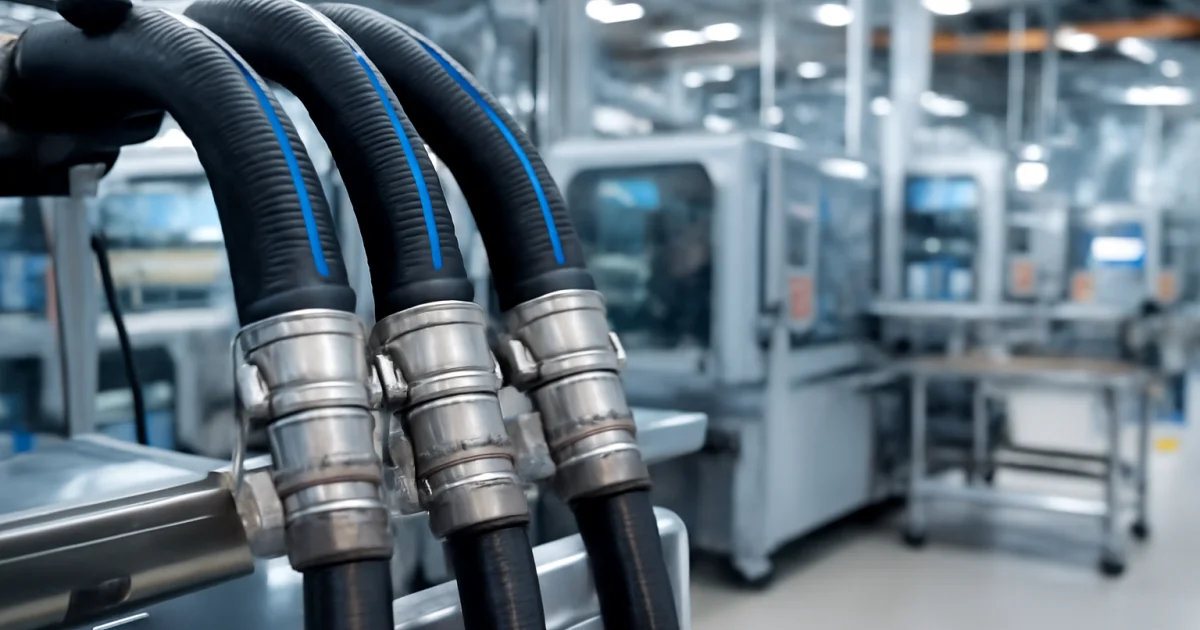
Latest Developments in Industrial Hose Technology for Malaysian Manufacturing in 2026
The manufacturing landscape in Malaysia is evolving rapidly, and nowhere is this more evident than in the world of industrial hoses. As factories in sectors like plastics, steel, oil & gas, mining, and cement push for greater productivity and reliability, the demand for advanced hose technology has reached new heights in 2026. This article dives deep into the latest developments in industrial hose technology, from material breakthroughs to smart monitoring, and how these changes are enabling Malaysian manufacturers to meet stricter standards and operational demands.
1. The Growing Importance of Industrial Hose Malaysia in 2026
Industrial hoses are no longer simple fluid-transfer components. For Malaysian manufacturers, hoses now play a critical role in ensuring system safety, reducing downtime, and supporting the operational efficiency of hydraulic and pneumatic machinery. The rise in automation, increased use of high-pressure systems, and expansion into more hazardous environments have all contributed to a surge in demand for reliable, high-performance hoses. In 2026, manufacturers are turning to suppliers who can provide not just products, but complete solutions tailored for the unique needs of local industries.
As more industries digitize their processes and integrate with global supply chains, the focus on robust, standardized, and traceable hose systems becomes even more significant. Manufacturers increasingly recognize that selecting the right hose solution can be the difference between operational continuity and costly production stoppages. This awareness is prompting a shift from reactive maintenance to proactive planning and investment in high-quality hose infrastructure.
2. Advanced Materials and Construction: Meeting Demanding Applications
One of the standout developments in industrial hose technology is the adoption of advanced materials. Modern hoses increasingly feature multi-layer constructions, blending synthetic rubbers, thermoplastics, and reinforcement braids for greater pressure ratings and flexibility. Stainless steel braided hoses and tubing have become popular for their resistance to corrosion and high temperatures—ideal for oil & gas, chemical, and food processing environments. For applications requiring chemical compatibility or anti-static properties, composite hoses are now widely selected, offering light weight and durability.
Manufacturers such as Continental, Eaton, and Manuli are continually refining their product lines to offer hoses that meet or exceed ISO and SAE standards. In Malaysia, these innovations enable safer operation in mining, steel production, and heavy machinery, where traditional hoses might fail due to abrasion, heat, or chemical exposure. For instance, Stainless Steel Flexible Hose options are now available in a range of diameters and lengths to address the diverse needs of local industries.
Recent material innovations also include the use of fluoropolymers for environments with aggressive chemicals, and thermoplastic elastomers for industries requiring lightweight, kink-resistant, and food-safe hoses. These new materials extend the service life of hoses and reduce the frequency of replacements, benefitting both operational efficiency and long-term costs. Factories handling sensitive or hazardous fluids are adopting hoses with specialized linings or anti-microbial layers to meet hygiene and safety regulations.
3. Hose Testing, Certification, and Safety Standards
With growing regulatory demands and a heightened focus on workplace safety, Malaysian manufacturers now prioritize certified hoses and documented testing. Hydrostatic testing, burst pressure validation, and traceable batch records are increasingly common requirements. Leading suppliers provide in-house testing services to ensure hoses meet local and international standards before installation.
Adhering to these standards not only reduces the risk of leaks or system failures, but also extends equipment lifespan and minimizes costly downtime. For procurement teams, working with a supplier offering comprehensive testing and certification—such as hydro testing and test bench validation—has become essential. More information on crucial quality checks can be found in the article 6 Key Factors Procurement Teams Must Check Before Buying Industrial Hoses.
In addition to pressure and burst testing, traceability is now a best practice. Each hose assembly can be tagged with a unique identifier, linking it to production and testing records. This allows for efficient recall or replacement in the event of manufacturing defects or evolving compliance requirements. Regular site audits and third-party certifications further assure buyers that hoses are fit for purpose and compliant with industry-specific regulations.
4. Smart Hoses and Digital Monitoring Solutions
2026 marks a significant leap toward Industry 4.0 for Malaysian manufacturers, with the integration of sensors and digital monitoring systems into industrial hoses. Smart hoses can now provide real-time feedback on pressure, temperature, and even internal wear, allowing for predictive maintenance and reducing the risk of unplanned outages. Wireless sensors, NFC tags, and data-loggers are being embedded into hose assemblies for advanced condition monitoring—features rapidly adopted in high-stakes sectors like oil & gas, mining, and chemical processing.
By leveraging these technologies, maintenance teams can schedule interventions before a failure occurs, improving safety and reducing total cost of ownership. As the cost of smart components drops, expect to see them become standard across more hose types, including hydraulic, pneumatic, and industrial water hoses.
For example, a petroleum refinery in Johor implemented a sensor-driven hose system to monitor temperature and pressure fluctuations during critical transfer operations. This upgrade enabled the engineering team to identify pressure surges and schedule timely hose replacements, eliminating unexpected line failures. Similarly, automotive parts manufacturers are using digital monitoring to track hose performance under repetitive movement, alerting staff when wear thresholds are reached.
To maximize the benefits of smart hoses, it is essential for factories to integrate monitoring data into their maintenance planning and asset management software. This ensures that predictive alerts are acted upon promptly, further reducing the risk of downtime and expensive repairs.
5. Customization and Application-Specific Hose Design
No two manufacturing environments are exactly alike, and this reality is driving demand for custom hose solutions. In 2026, suppliers such as Continental Hydraulic Trading Sdn Bhd are offering tailored hose assemblies, designed to match the unique requirements of diverse industries—from large-diameter hoses for bulk material handling to ultra-flexible pneumatic tubing for automated machinery.
Custom services often include hose crimping, length adjustments, specialized fittings, and assembly of hoses with built-in valves or sensors. For sectors with unique challenges—such as mining operations requiring abrasion-resistant jackets or plastic factories seeking anti-static hoses—customization is crucial for both safety and efficiency. Learn more about the risks of using generic hoses in the article The Hidden Risks Of Using Low Quality Industrial Hoses.
Case studies demonstrate the value of proper customization. In the palm oil industry, a bespoke hose assembly with food-grade lining and reinforced exteriors significantly reduced contamination risks and hose failures. Meanwhile, cement plants have benefited from heat-resistant and dust-proof hoses with custom quick-connect fittings, simplifying maintenance during scheduled shutdowns. Consulting with experienced engineers can help select the right hose type, fitting, and assembly method—mitigating risks and boosting plant performance.
To ensure optimal outcomes, manufacturers should conduct a thorough needs assessment with their supplier, taking into account variables such as temperature range, pressure requirements, chemical compatibility, and expected abrasion. Proper documentation of these specifications helps avoid mismatches and allows for faster troubleshooting if issues arise during operation.
6. Innovations in Fittings, Valves, and Connectors
The performance of any hose assembly relies as much on the quality of its fittings and connectors as on the hose itself. In 2026, advancements in stainless steel tube fittings, ball valves, needle valves, and quick-connect couplings are enhancing system reliability and ease of maintenance. With the increased use of stainless steel ball valves and high-integrity manifolds, manufacturers benefit from improved corrosion resistance and leak prevention, especially in aggressive or high-pressure environments.
Pneumatic systems, too, are seeing gains with new ranges of air tubing and fittings, offering easier installation and better compatibility with automation systems. The result is faster assembly, reduced maintenance time, and greater flexibility in system reconfiguration.
One notable trend is the shift toward modular connector systems, which allow for rapid hose changes and system upgrades without major downtime. Push-to-connect fittings, color-coded couplings, and self-sealing valves are gaining traction in Malaysian factories, reducing the risk of incorrect installation and improving workplace safety. Furthermore, developments in fitting surface treatments and sealing technologies are extending the operational lifespan of hose assemblies, even under continuous exposure to chemicals or high temperatures.
For procurement and maintenance teams, working with suppliers who can provide a full range of compatible fittings and adapters is essential to avoiding bottlenecks and ensuring seamless integration with existing infrastructure. Standardizing on high-quality connectors also simplifies training and reduces the risk of leaks or blowouts due to improper assembly.
7. Sustainable and Eco-Friendly Hose Solutions
Sustainability is a rising priority for Malaysian manufacturers, with many plants seeking to reduce environmental impact and improve operational efficiency. Hose technology in 2026 reflects this trend, with more suppliers offering recyclable hose materials, lead-free fittings, and designs that minimize fluid loss during disconnection. Composite and thermoplastic hoses are often lighter, resulting in lower transportation emissions and easier end-of-life handling.
Increasingly, procurement teams are evaluating the full lifecycle impact of their hose choices, from raw material sourcing to disposal, and working with suppliers who can provide environmental documentation and recycling programs.
Some factories are implementing closed-loop recycling for hoses, sending used assemblies back to the manufacturer for repurposing or eco-friendly disposal. Others are selecting hoses with biodegradable components or those built to minimize leaching of hazardous substances. Environmental certifications such as RoHS and REACH compliance are expected for new hose installations, especially in industries with strict export requirements.
By collaborating with suppliers who prioritize green manufacturing and product stewardship, Malaysian companies can demonstrate their environmental commitment, win new business from sustainability-conscious clients, and reduce long-term operating costs through waste minimization and resource efficiency.
8. Choosing the Right Hose Pipe Supplier: Quality, Service, and Support
With the rapid evolution of hose technology, the choice of hose pipe supplier is more critical than ever. Top suppliers distinguish themselves not only by offering a broad product range—including hydraulic hoses, industrial hoses, pneumatic tubing, and stainless steel hydraulic tubing—but also by providing technical expertise, testing, after-sales support, and fast delivery.
Continental Hydraulic Trading Sdn Bhd, for example, serves as a one-stop hydraulic solution for Malaysian industry, offering in-house fabrication, maintenance services, and a strong portfolio of international brands such as Eaton, Manuli, S-LOK, STAUFF, HYDAC, and WIKA. Their ability to deliver both off-the-shelf and custom solutions—ranging from hose hydro testing to power pack manufacturing—makes them a trusted partner for manufacturers in sectors as diverse as steel, cement, oil & gas, and mining.
When selecting a supplier, it is essential to consider not just price, but also certifications, service capabilities, and experience in your specific industry. Those seeking specialized solutions, such as stainless steel hydraulic tubing or flexible hose assemblies, benefit from working with suppliers who understand the technical demands and regulatory landscape of Malaysian manufacturing.
To streamline procurement and minimize risk, develop a checklist for supplier evaluation. Confirm that your chosen partner offers comprehensive documentation, responsive after-sales support, and a proven track record with references in your sector. Evaluate their stock holding, lead times, and ability to handle urgent or specialized orders. Establishing a long-term relationship with a reliable supplier can secure better pricing, priority delivery, and early access to new hose innovations as they become available.
9. Practical Examples: Hose Upgrades in Malaysian Factories
Across Malaysia, manufacturing plants are seeing measurable gains through the adoption of the latest hose technologies. For instance, a steel mill in Selangor recently upgraded its high-pressure hydraulic hoses to a new generation of reinforced synthetic rubber hoses with embedded wear sensors, resulting in a 30% reduction in unplanned maintenance events. In the plastics industry, a factory producing injection-moulded parts switched to anti-static composite hoses for their pneumatic systems, eliminating static discharge issues and improving worker safety.
Mining operators have moved toward stainless steel flexible hoses for chemical transfer lines, improving corrosion resistance and reducing hose replacement frequency. Cement plants have adopted quick-connect fittings and modular hose assemblies, enabling faster changeovers and less downtime during scheduled maintenance.
These real-world examples highlight the tangible benefits of keeping pace with technological advancements and working closely with experienced suppliers.
In addition, a food processing facility in Penang recently conducted a phased hose replacement to meet new hygiene standards. By collaborating with their supplier to source FDA-compliant, easy-to-clean hoses and fittings, they reduced contamination risks and passed regulatory inspections on the first attempt. Another example from an electronics assembly plant shows how upgrading to hoses with anti-microbial linings and static dissipative layers improved both product yield and worker safety, while lowering the frequency of unexpected shutdowns.
These scenarios underscore the importance of ongoing collaboration between engineering, procurement, and maintenance teams. Regularly reviewing hose performance data, staying informed about new product releases, and conducting periodic risk assessments can help Malaysian manufacturers stay ahead of compliance changes and competitive challenges.
10. Conclusion: Future-Proofing Malaysian Manufacturing with Advanced Hose Technology
Staying ahead in Malaysia’s competitive manufacturing sector requires embracing the latest advancements in industrial hose technology. By investing in modern materials, certified testing, smart monitoring, and tailored solutions, manufacturers can achieve greater safety, efficiency, and reliability across their operations. Selecting the right hose pipe supplier—one with technical expertise, industry experience, and a commitment to quality—ensures your facility is prepared for the demands of 2026 and beyond.
For further reading on selecting the best hose types for your application, visit PVC Hose Vs Composite Hose: Which Is Safer And More Cost Effective For Malaysian Industries.
Whether you’re upgrading your hydraulic, pneumatic, or industrial hose systems, the innovations outlined here will help guide your procurement and maintenance strategies—securing your plant’s productivity long into the future.
Frequently Asked Questions
What are the latest materials used in industrial hoses for Malaysian manufacturing?
In 2026, industrial hoses in Malaysia increasingly utilize advanced synthetic rubbers, thermoplastics, and multi-layer constructions for improved flexibility, pressure resistance, and chemical compatibility. Stainless steel braided hoses are popular for high-temperature and corrosive environments, while composite hoses offer lightweight durability for chemical and fuel transfer.
Why is certified hose testing important for manufacturing plants?
Certified hose testing ensures that hoses meet local and international safety standards, reducing the risk of leaks, bursts, or failures. This is especially important in industries operating high-pressure or hazardous systems. Testing such as hydrostatic pressure and batch traceability helps manufacturers maintain safety, minimize downtime, and comply with regulatory requirements.
How are smart hoses changing maintenance in Malaysian factories?
Smart hoses equipped with sensors and monitoring devices allow real-time tracking of pressure, temperature, and wear. This predictive maintenance capability helps plant engineers identify issues before they lead to failures, reducing unplanned downtime and enhancing safety. As costs decrease, smart hose technology is becoming more accessible across various sectors.
What should I consider when choosing an industrial hose supplier in Malaysia?
Look for suppliers who offer a comprehensive product range, technical expertise, certified testing services, and after-sales support. Experience in your industry, the ability to provide custom hose assemblies, and partnerships with reputable brands are also important factors. Continental Hydraulic Trading Sdn Bhd, for example, is valued for its broad product offerings and in-house service capabilities.
Are there eco-friendly industrial hose options available in 2026?
Yes, many suppliers now offer industrial hoses made from recyclable materials and lead-free fittings. Modern designs focus on minimizing fluid loss and environmental impact, with lighter hoses reducing transportation emissions. Manufacturers can request environmental documentation and recycling programs from their hose suppliers.
Future-Proof Your Operations with Advanced Industrial Hose Solutions
Ready to upgrade your manufacturing facility with the latest in industrial hose technology? Continental Hydraulic Trading Sdn Bhd offers a complete range of hydraulic hoses, industrial hoses, pneumatic tubing, stainless steel hoses, and certified fittings—all designed to meet the unique demands of Malaysian industries. Our expert team provides custom solutions, certified testing, on-site support, and trusted international brands to ensure your plant runs reliably and efficiently in 2026 and beyond.